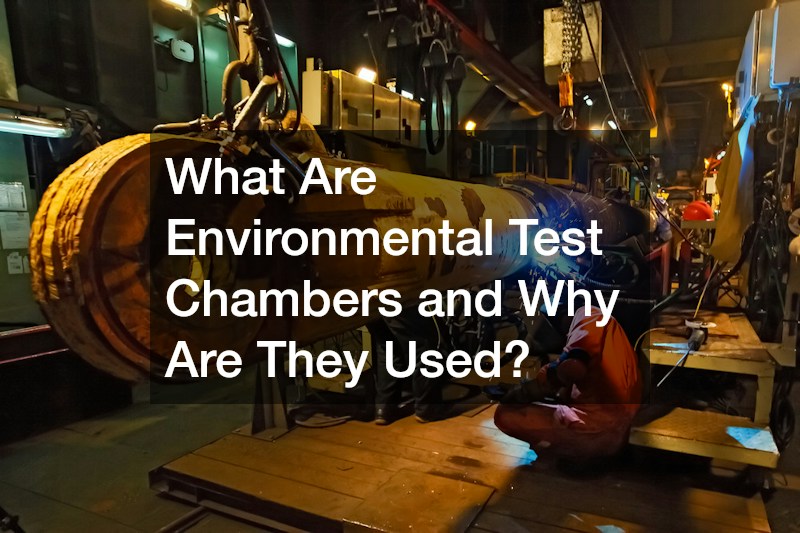
Modern products face brutal conditions: scorching desert heat, freezing sub-zero altitudes, tropical humidity, and corrosive coastal salt fog. Before a smartphone, satellite, or electric vehicle reaches consumers, engineers must verify that it can endure these extremes without failing. Environmental test chambers serve as the vital proving grounds for this validation. These specialized enclosures artificially duplicate real-world climatic and dynamic stresses under strictly controlled laboratory settings, ensuring products meet stringent safety, reliability, and regulatory benchmarks.
What Are the Primary Types of Environmental Test Chambers?
Temperature and Thermal Shock Chambers
Thermal enclosures subject items to extreme hot and cold plateaus or rapid thermal transitions to evaluate material expansion, thermal fatigue, and structural integrity.
Humidity and Moisture Control Chambers
These units introduce controlled, saturated moisture levels across wide temperature ranges to uncover condensation risks, corrosion vulnerability, and moisture absorption issues.
Altitude and Low-Pressure Chambers
By combining vacuum systems with thermal control, altitude chambers simulate the depressurized environments encountered by avionics, satellite assemblies, and air cargo.
Salt Spray and Corrosion Chambers
Corrosive chambers atomize concentrated saline solutions over coated or bare metal parts to evaluate long-term galvanic corrosion and protective finish durability.
Vibration and Combined ESS Chambers
Environmental Stress Screening (ESS) systems merge electrodynamic shakers with rapid thermal cycling to reveal latent mechanical flaws and soldering defects in electronics.
How Do Environmental Test Chambers Simulate Real-World Conditions?
Heating Systems
High-grade nichrome wire heating elements pair with directional air recirculation blowers to distribute consistent, uniform heat across the workspace interior.
Mechanical Cooling and Cryogenics
Compressor-driven cascade refrigeration circuits or direct liquid nitrogen (LN2) injections enable rapid pull-downs to sub-zero and cryogenic temperatures.
Controlled Humidity Generation
Steam generators, conditioned water baths, or ultrasonic atomizers inject precise vapor into the airflow, while dedicated dehumidification coils condense out excess moisture.
Sensor Feedback and Closed-Loop Control
Precision platinum RTDs, thermocouples, and solid-state hygrometers constantly monitor internal conditions, streaming data to PID controllers to maintain tight test tolerances.
Programmable Cycling Profiles
Microprocessor touchscreen interfaces allow engineers to program complex multi-day thermal and hygrometric profiles that replicate exact transit routes or operating conditions.
Why Do Manufacturers Use Environmental Testing Before Launching a Product?
Identifying Early Design Flaws
Stress testing reveals solder micro-cracks, seal shrinkage, and thermal bottlenecks during early R&D phases before expensive volume tooling begins.
Accelerated Life Testing (ALT)
Chambers compress months or years of field exposure into mere days or weeks by using elevated stress models to predict life expectancy.
Preventing Costly Product Recalls
Field failures trigger expensive logistical recalls; pinpointing component breakdown in the test lab prevents dangerous malfunctions after commercial release.
Protecting Brand Reputation
Delivering hardware that reliably survives thermal swings and weather shifts preserves customer trust and safeguards market standing.
Reducing Warranty Claims
Catching premature wear and component fatigue early lowers ongoing warranty liability, field repair expenses, and customer service burdens.
Which Industries Rely Most Heavily on Environmental Chambers?
Aerospace and Defense
Flight hardware must withstand extreme stratospheric temperature swings and deep vacuum environments without mechanical or telemetric failure.
Automotive and E-Mobility
From cockpit consoles to high-voltage EV battery packs, automotive components must survive grueling freeze-thaw cycles and engine-bay heat soak.
Consumer Electronics
Handheld electronics, displays, and wearables undergo thermal throttling checks and condensation assessments to guarantee dependable daily performance.
Pharmaceuticals and Medical Devices
Drug formulations and sterile packaging require long-term shelf-life validation under tightly regulated stability storage conditions.
Renewable Energy
Solar photovoltaic modules and wind turbine electronics are evaluated against extreme UV radiation, thermal cycling, and freeze-thaw degradation.
What Regulatory Standards Require Environmental Chamber Testing?
MIL-STD-810
This United States military standard establishes environmental engineering considerations and laboratory test procedures for defense and ruggedized equipment.
IEC 60068
The International Electrotechnical Commission standard outlines foundational testing procedures for assessing the environmental resilience of electrotechnical products.
ASTM International Standards
ASTM test protocols define standardized methodologies for accelerated weathering, cyclic corrosion, and salt spray exposure across industrial materials.
ISO 16750
This automotive specification governs electrical, mechanical, and climatic stress test conditions for electrical road vehicle equipment.
FDA and ICH Stability Guidelines
The International Council for Harmonisation (ICH) mandates specific climatic chamber storage criteria to confirm pharmaceutical safety and expiration dating.
Modern manufacturing relies on precision and predictability, leaving no room for guesswork regarding how materials and components perform outside the factory. Deploying environmental test chambers across research, development, and quality assurance workflows helps organizations expose hidden failure modes, satisfy strict international compliance standards, and deliver resilient products engineered to endure their operating environments.